
Hey! Scott Reyes, here. One of the great things about technology is that if you use it correctly, it frees people up to do what people do best. At EnvoyFM, we always say, "Agents for well-defined, repetitive work. People for work that requires connection, nuanced judgement, and critical thinking." AI is changing how we work, and with it, creating opportunities to spend more time on the people part of our jobs.
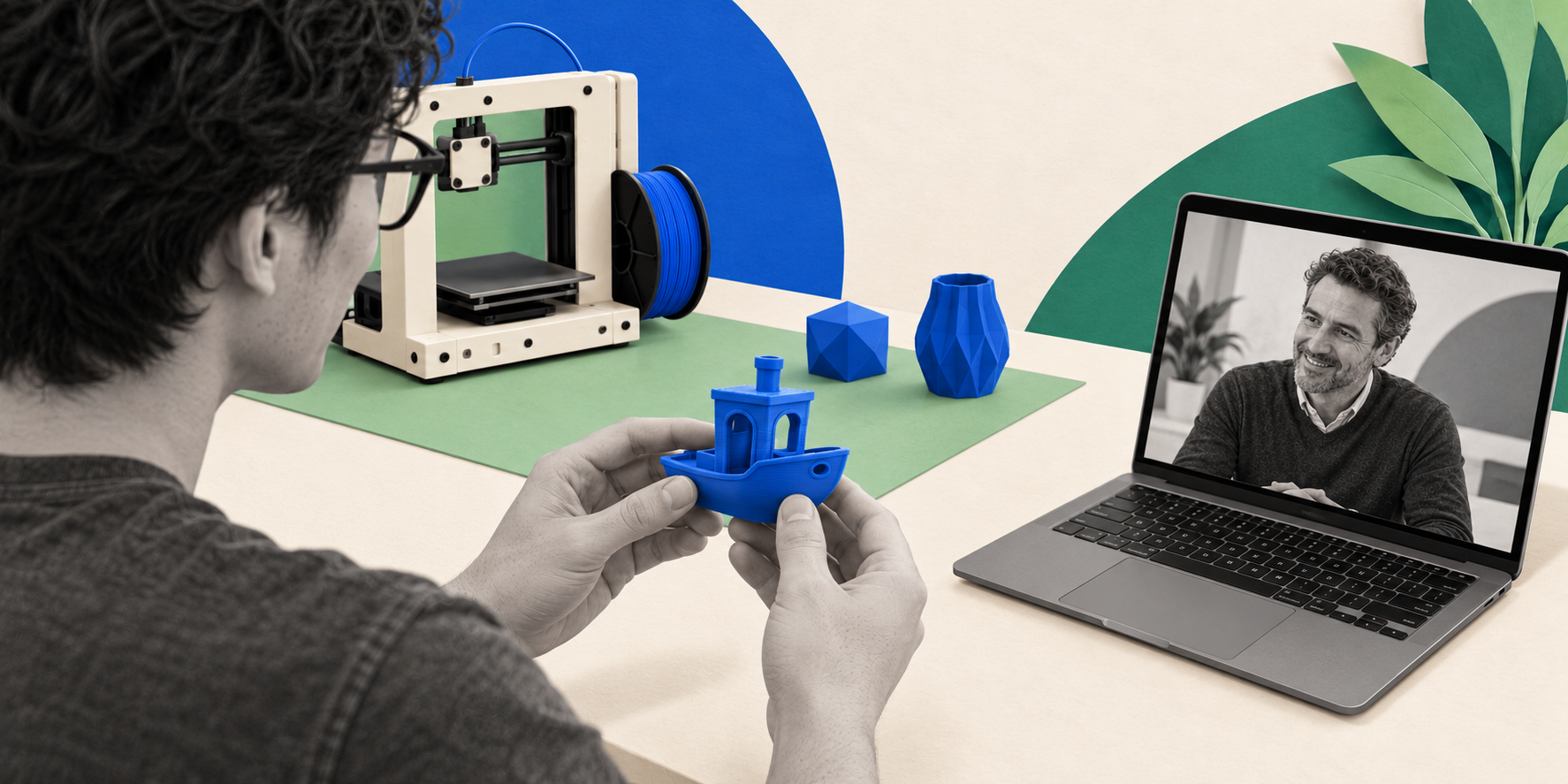
In a company meeting in May, I told our team that one of my six month check ins had turned into a conversation about 3D printers.
I used that example to explain what the check ins were for. I was not bringing people in to tell them they were doing a bad job. I wanted to know how they were doing, and they could talk about anything. That could include a hobby, not just a work update.
There is a difference between those two conversations. One begins with my assessment of someone. The other gives them room to explain their experience. I wanted our check ins to have room for that second conversation, including things I might not know to ask about.
I also wanted them to hear from me outside conversations about a problem. Silence sends its own message. I have said it before: complacency kills, and so does silence. When a leader goes quiet, people fill in the gap themselves and start wondering, "Am I not doing a good enough job?" That is part of why everyone on our team checks in with me every morning, and why I did not want these check-ins to feel like bad news.

Explain why you want to meet
At FM Dashboard, communication and workload were two things I specifically wanted to check on. I wanted to know whether communication was working and whether the workload was getting overwhelming.
The questions themselves are simple. How are we doing? How are you doing? How is your family? How is your work-life balance? I end with one more: is there anything I can do to support you better?
The questions were there to keep the person talking. They were not just a route to the end of the meeting.
That purpose matters. A calendar invitation tells someone when we are meeting, but it does not tell them what kind of conversation I am trying to have. In that company meeting, I made the distinction plainly because I wanted the team to understand it.
As a leader, I have a view of the work. The person doing it has a view too. If the conversation is only about what I have noticed, I leave out the very perspective I am asking them to bring.
I do not see asking how someone is doing as a way to avoid talking about responsibilities. Communication and workload are responsibilities worth discussing. The difference is whether I make room for the person to describe them before deciding what the answer means.

The work update is not the whole conversation
For a facilities leader, that distinction has a practical use. A work order update can tell you what is open, what is waiting and what needs a decision. A conversation with the person handling that work can tell you how the coordination is going for them.
Those are related questions, but they are not identical. Knowing that a task is moving does not answer whether instructions are clear. Knowing what is assigned does not answer how the person is experiencing the workload.
That is why I wanted to ask about communication and workload directly. I did not want to assume that my view of the work gave me the entire picture.
In the same May meeting, I told the team not to assume I knew something just because it seemed obvious to them. I do not know what I do not know.
That is an important thing for me to admit. If I am asking people to be open, I cannot also act as though I already have every answer. Their side of the conversation needs to add something, not simply confirm what I think.
Some of our best ideas have come from listening to our people. If I jump in with "No, no, we need to do it this way," or start defending my opinion, I end the conversation I asked for.

Listening does not mean promising an instant fix
Some people had raised points on someone else's behalf. I told the team that was okay. If they were uncomfortable speaking directly to me, they could speak to another leader. I wanted the information to reach me.
I also explained what a response could look like. If I knew the reason for something and could explain it, I would. If I needed to come back with an answer, I would say so. If it was something I was still thinking about, I would tell them that too.
Those are different responses. Hearing a concern does not mean every question has an immediate answer, and being willing to listen does not mean every requested change can happen.
But there is room between pretending to know everything and having nothing useful to say. I can explain what I know, acknowledge what I do not know and be clear about what remains undecided. That is a more honest conversation than giving someone an answer just to finish the meeting.
Sometimes the answer is a change we can make. For example, in one of my check ins, someone mentioned wanting to be more involved in our all-company meetings, but Monday was their day off. We moved the meeting to Thursdays for the following quarter so they would be able to attend each one. I would not have known that if I had not asked.
Make room for the answer
The 3D printer conversation fits into that purpose. It did not have to become a productivity lesson to belong in the check in.
I do not need every conversation to turn to a hobby, but I do need to leave room for an answer that is not already in my questions.
That answer might be about communication. It might be about workload. Or it might be something else the person wants to talk about.
I try to make room for that from the first interview by asking people about their hobbies outside of work, and I watch what happens. Sometimes they go off on a tangent because they enjoy it so much, then catch themselves like they have said too much. I tell them to keep going because I want to hear it.
The work still matters, and so does hearing from the person doing it.
If I ask how someone is doing, I need to give them room to tell me. That was the point of the check in, whether we were talking about the work or a 3D printer.